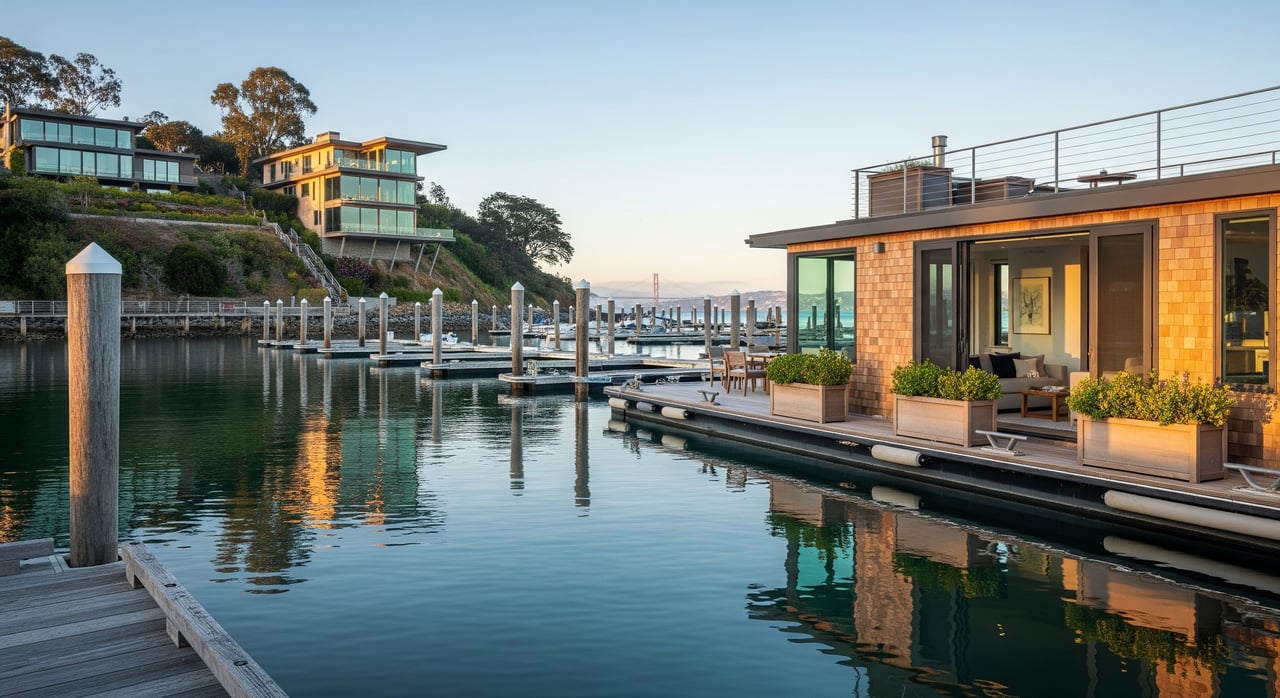
Picture yourself stepping onto a sunlit dock with coffee in hand, or pulling into your hillside driveway with a sweeping view of the Bay. Both are classic Sausalito moments, yet they deliver very different daily lives. If you are torn between a floating home and a hillside house, you are not alone.
This guide helps you compare lifestyle, costs, risk, commute, and rules so you can make a confident choice. You will get a simple checklist, key links to verify risk and permits, and practical tips drawn from local experience. Let’s dive in.
Sausalito living at a glance
Waterfront floating homes
You live at water level, close to Bridgeway and the marina scene. Shops, galleries, and the ferry are often a short walk. Expect more pedestrian traffic and some marina noise from small boats and services. Instead of a yard, your outdoor space is usually a deck. Parking can be limited to assigned spaces or municipal lots nearby.
Hillside neighborhoods
You trade docks for sloped streets, garages, and more traditional home layouts. Homes often sit on larger lots with more privacy and outdoor space for gardening or play. You may gain wide Bay views and quieter nights away from tourist areas. Daily life usually includes a short uphill drive or walk from Bridgeway.
Cost of ownership
Purchase price and market size
Sausalito is a high-value market with prices that vary by property type, view, and condition. Floating homes range widely, from modest floats under seven figures to iconic larger homes that have sold in the one-to-three-million-plus range in recent years. The floating home market is niche with fewer sales. Hillside homes compete in a broader buyer pool and often command higher prices for larger lots, significant views, and updated construction.
Prices change. Ask for current local comps before you narrow your search.
Recurring monthly and annual costs
- Property tax. In California, Prop 13 sets a base near 1% of assessed value plus local assessments. Some floating homes are taxed like real property; others may be treated as personal property or sit on leased tidelands. Verify status with the county assessor for the specific parcel.
- Moorage and community fees. Many floating homes pay slip or berth fees and shared maintenance or utilities. These vary by marina and services.
- Insurance. Floating homes need marine or hybrid houseboat policies. Hillside homes use standard homeowners coverage, but premiums can rise in higher wildfire or slope risk areas.
- Utilities and maintenance. Floating homes may use pump‑out systems and require marine‑grade upkeep like hull inspections and corrosion control. Hillside homes have typical maintenance plus potential slope, drainage, and retaining wall work.
Financing and resale
Many hillside homes qualify for conventional mortgages. Floating homes are different. If a floating home is considered real property, mortgage options may exist. If it is classified as personal property or a vessel, you may need a marine or chattel loan with different terms. The Consumer Financial Protection Bureau explains chattel loans; confirm your lending path early.
Resale timelines can also differ. Floating homes attract a specific lifestyle buyer and may take longer to sell. Hillside homes usually draw a larger buyer pool.
Risk and inspections
Waterfront: flood and marine issues
Floating homes sit at or near mean tide level and are more likely to be in FEMA flood zones. Check the FEMA Flood Map Service Center for any address you are considering. For long‑term planning and sea level context, see the NOAA Sea Level Rise Viewer and Marin County’s BayWAVE vulnerability assessment.
Recommended inspections for floating homes:
- Marine survey for float condition, buoyancy, and structural integrity.
- Structural evaluation of the connection between float and house framing.
- Electrical and plumbing checks for marine systems, including shore power and pump‑outs.
- Moisture and ventilation review to assess rot and corrosion.
- Dock, piling, and mooring hardware inspection, including shared infrastructure.
Flood insurance may be required or advisable. Review basics through the National Flood Insurance Program at FloodSmart, and compare private options.
Hillside: slope, drainage, and wildfire
Hillside homes face different hazards, including landslides on steep slopes, soil erosion, and wildfire risk in vegetated areas. A standard home inspection is a starting point. Add a geotechnical report if there are slope concerns, if you plan to remodel or expand, or if the parcel lies in a mapped risk area. Drainage, driveway slope, retaining walls, and defensible space should be reviewed.
Insurance costs can vary. Homes in higher wildfire severity areas may face higher premiums or limited coverage, which sometimes leads owners to seek FAIR plan or surplus markets. Get quotes early and compare coverage limits before you make an offer.
Access, commute, and parking
Ferry and transit
If your routine involves San Francisco, the Golden Gate Ferry from Sausalito takes about 25 to 30 minutes, depending on the schedule. See current routes and times on the Golden Gate Ferry Sausalito page. Marin Transit serves parts of Sausalito, though frequency and routes vary by neighborhood, so check Marin Transit for planning.
Waterfront buyers often enjoy an easy walk to the ferry and downtown. Hillside buyers may walk or drive down to Bridgeway, then connect to transit.
Driving and parking
Driving to San Francisco over the Golden Gate Bridge can be fast in off‑peak hours and slow at rush hour. Waterfront neighborhoods often have constrained parking in municipal lots or limited assigned spaces. Hillside homes are more likely to include a garage and driveway, though some streets are narrow with tight on‑street parking.
Rules, leases, and permits
Floating home tenure
Floating homes can involve different ownership structures. You might own the structure and lease the slip or tidelands. There are also cooperative and association models, and less commonly, fee simple berth ownership. Lease terms, rent escalations, transfer rules, and marina policies can affect financing and resale. Review all documents closely before you commit.
Permits and approvals
Waterfront work, utility hookups, and major repairs may require city permits and possibly approvals tied to tidelands or coastal resources. For local rules and the city’s Local Coastal Program, consult the City of Sausalito Planning Division. Hillside projects often trigger geotechnical and grading permits, tree permits, and stormwater controls.
Quick decision checklist
- Financing
- Confirm whether the property is real property or personal property, and secure pre‑approval for the right loan type.
- Title and tenure
- For floating homes, review slip or tidelands leases, HOA or marina rules, and any ground rent or assessments.
- Inspections
- Floating homes: marine survey, electrical and plumbing, moisture, dock/piling.
- Hillside homes: geotechnical report if needed, drainage and retaining walls, wildfire defensible space.
- Insurance
- Get quotes for homeowners or houseboat policies, and flood insurance if applicable. Compare premiums and coverage limits.
- Utilities and maintenance
- Ask about moorage fees, pump‑outs, shore power, and maintenance schedules. For hillsides, ask about drainage systems and past slope work.
- Hazard checks
- Review FEMA flood maps, NOAA sea level rise, and Marin County’s BayWAVE. Ask about neighborhood mitigation efforts.
- Commute and daily feel
- Visit at commute hours and on weekends to assess noise, parking, and ferry activity.
- Resale factors
- Request recent comparable sales for both floating and hillside properties, plus typical days on market.
- Permits and compliance
- Confirm past upgrades were permitted and there are no open code issues at the city or county.
Ready to compare specific homes and risks side by side? With legal fluency, design insight, and local knowledge, we help you weigh lifestyle, cost, and long‑term risk with clarity. If you want a grounded path to a confident purchase in Sausalito, connect with Matt Knight for a confidential consultation.
FAQs
What is daily life like on a Sausalito houseboat?
- You live at water level near shops and the ferry, enjoy decks instead of yards, and should plan for marina activity, pedestrian traffic, and limited parking in some areas.
How do moorage fees work for Sausalito floating homes?
- Many owners pay monthly slip or berth fees and shared utilities or maintenance; costs vary by marina, services, and whether the slip is leased or owned.
Can you get a conventional mortgage for a Sausalito houseboat?
- Sometimes, if it is treated as real property; many floats are personal property and use marine or chattel loans with different terms, so confirm loan type early.
What inspections are critical for Sausalito hillside homes?
- A standard home inspection plus geotechnical review if slope concerns exist, along with drainage, retaining wall, and wildfire defensible space evaluations.
Is flood insurance required for Sausalito waterfront properties?
- It depends on the flood zone and lender; check the property’s status on FEMA maps and price coverage through the NFIP and private markets.
How does the ferry commute compare to driving from Sausalito?
- The Golden Gate Ferry ride to San Francisco is about 25 to 30 minutes; driving over the Golden Gate Bridge varies widely with traffic and time of day.